
Flood risk assessments and drainage strategies
Founded in 1978, almost 50 years experience across UK-wide projects.
BIM market leaders since 2007, with Revit used across the practice.
IStructE and CIHT accredited, with ISO accreditation in place.
Director-led on every project, so you deal with senior engineers throughout.
Flood risk assessments
A flood risk assessment (FRA) sets out how flooding could affect a site and how a development responds to flood risk. For many projects, it’s a planning requirement and helps shape early decisions about layout and levels.
An FRA may be needed for sites in Flood Zones 2, 3a or 3b, sites over one hectare in Flood Zone 1, or developments in critical drainage areas. It considers relevant sources of flooding, including rivers, coastal, surface water, groundwater, sewers and reservoirs.
The assessment supports compliance under the National Planning Policy Framework (NPPF), including the Sequential Test and, where relevant, the Exception Test. It can also inform:
- Flood extent and depth
- Safe access and egress
- Finished floor levels
- Mitigation measures
- Climate change allowances
Where required, we provide the technical information needed to support engagement with statutory consultees, including the Environment Agency and Lead Local Flood Authority.
Drainage Strategies and SuDS Design
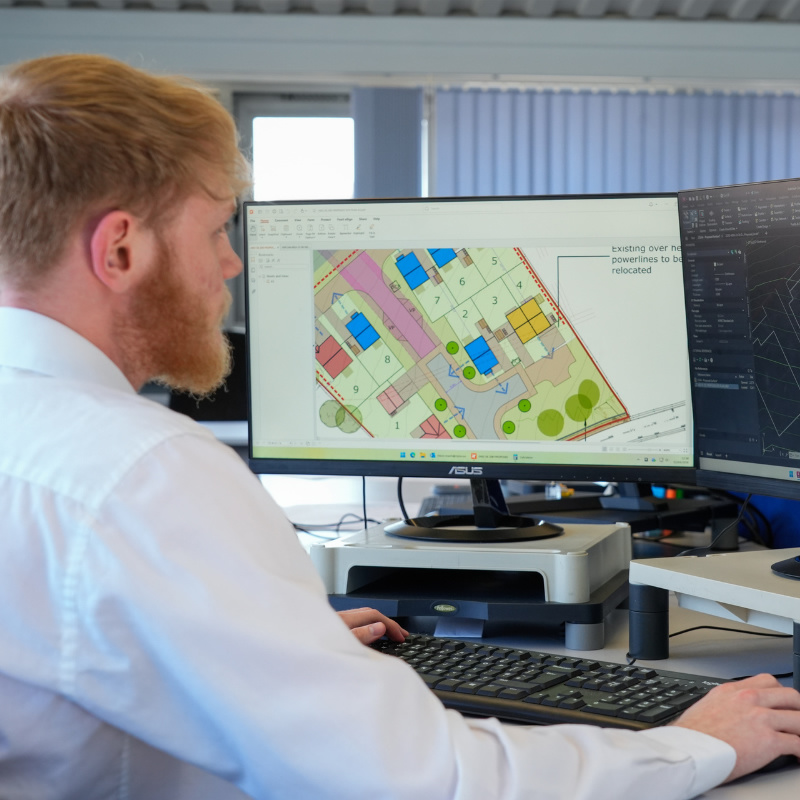
Not every site needs a flood risk assessment, but many still need a surface water drainage strategy to show how rainfall will be managed without increasing flood risk elsewhere.
We design sustainable drainage systems (SuDS) around the site from the outset, following the drainage hierarchy: allowing water to soak into the ground where suitable, using on-site attenuation where required, then considering discharge to a watercourse or sewer. Where site layouts permit, ponds and swales can also deliver direct ecological improvements. We work to ISO 14001:2015 for environmental management.
The bigger point is timing. Integrate drainage with the site layout early and it can help minimise the financial impact of SuDS. Leave it too late and valuable, developable land can end up being given over to water storage because there’s nowhere else for it to go.
Planning compliance and regulatory liaison
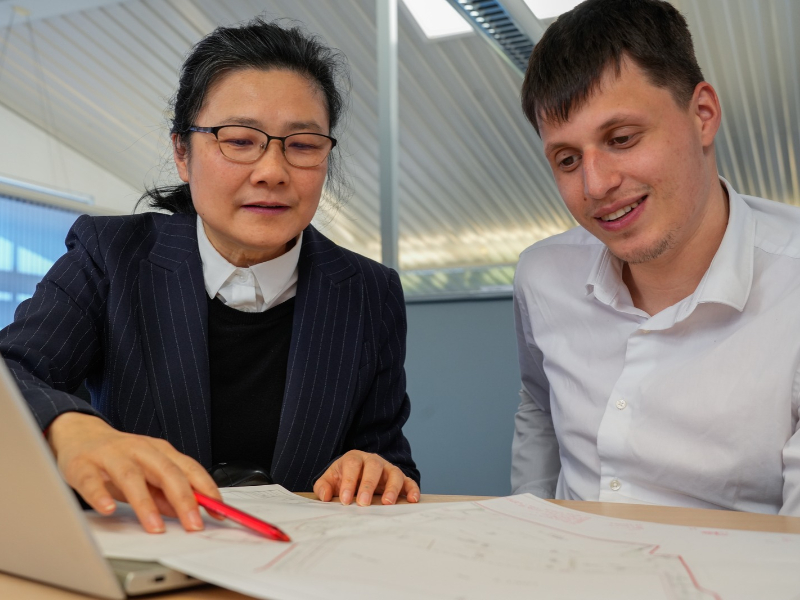
Getting a scheme through planning means addressing the right issues with the right people at the right time. We have established contacts within local authorities and statutory bodies, helping to streamline the design process
To meet statutory consultee requirements, we develop the technical flood-risk and drainage information needed to support the planning process. Planning permission also often comes with drainage conditions attached. We can provide the information needed to get those conditions discharged and keep the project moving.
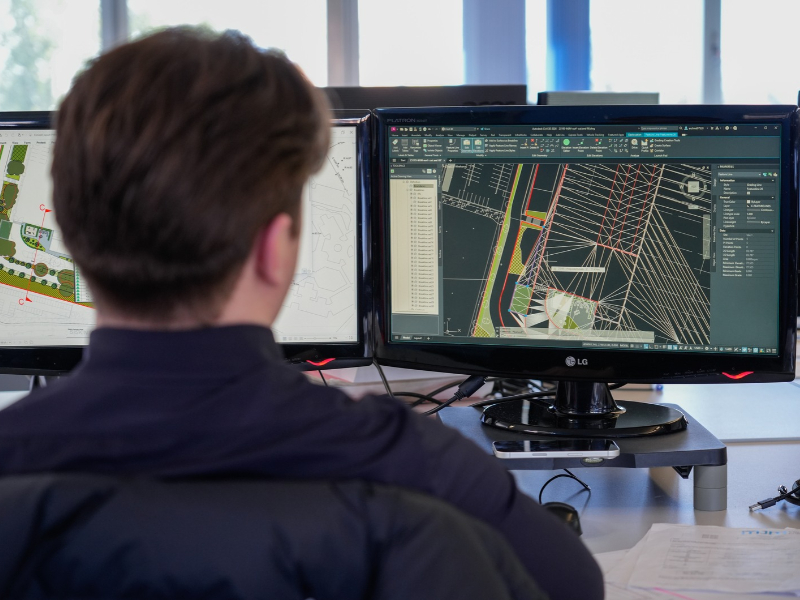
Our directors stay involved throughout. That senior, early involvement helps identify constraints while there’s still time to work around them, reducing avoidable redesign later.
We’re members of the Institution of Civil Engineers and the Institution of Structural Engineers, and work to ISO 9001:2015 for quality management.
Sectors
Industrial and logistics
Surface water management is a major consideration on large industrial and logistics schemes. We’ve delivered site-wide drainage design for major developments across the sector, including large manufacturing facilities.
Food production and manufacturing
Drainage needs to work alongside site levels, earthworks and the wider design. On one food production project, the scheme required major earthworks and the diversion of a river to create a new biodiverse corridor.
Commercial and retail
Flood risk and drainage can influence site layout, levels and the amount of developable space available. On one retail development within a floodplain, we designed a complex SuDS system using porous paving to meet Environment Agency requirements.
Residential and brownfield regeneration
Our experience on difficult and contaminated brownfield sites means drainage and flood risk can be considered alongside ground conditions and other development constraints from an early stage.
Request a callback
Talk to our team about your flood risk or drainage requirements.